
Marvel Comics Editor Declares The Adoption Of AI Art To Be Inevitable

While so much of the comic book industry is fighting against AI, there are some who are stopping, kicking and screaming, and realizing the inevitable: that the tool is only going to get better and will be a force multiplier that isn’t going to go away. Tom Brevoort, best known for being the editor of the X-Men line at Marvel Comics, has come to accept that it is unlikely to be stopped.
Part of the fun of AI is that eventually people will be able to make their own movie posters, comics, films, games, and more, which would have required thousands or millions of dollars of investment to conceptualize art before. It’s the great equalizer, where large corporations can’t have a stranglehold on storytelling in certain media because the barrier to entry will be a $10/month subscription.
Comic books, especially, will be interesting for the art form. One artist who’s working with me is already using the tool to take his own pencil sketches and fill in the line work for the details. The results are fantastic, and though it still requires a lot of work on his part, the effort is a lot faster than if he had inked the pictures himself.
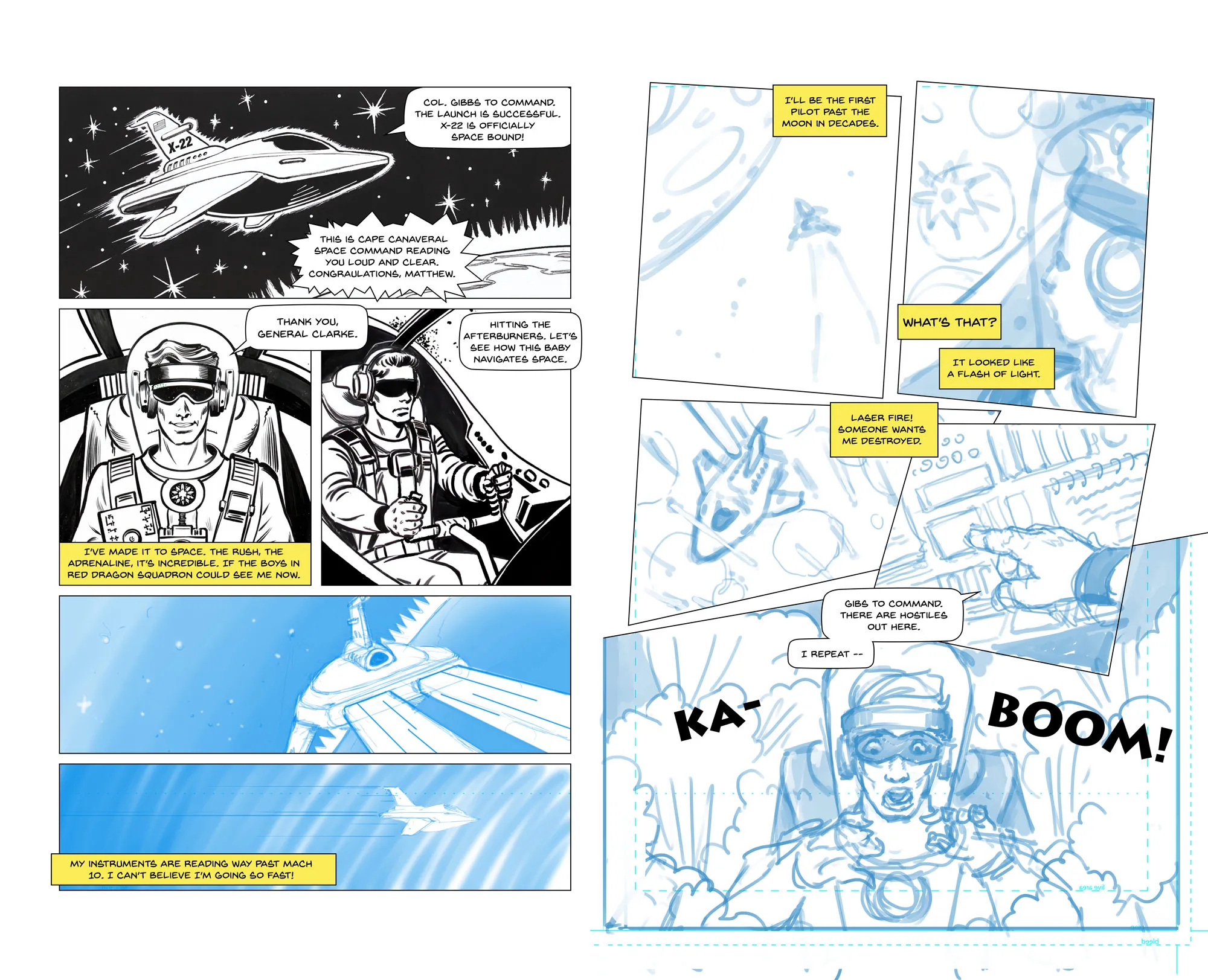
Meanwhile, in the mainstream comic book industry, they’ve been initiating various witch hunts against AI art, specifically at conventions as they have gone from protesting AI, to narcing on AI artists to forcibly remove them from conventions. Several comic cons are adopting “no AI art” policies as a consequence, which is nonsensical as so much of the industry is already moving that direction.
Tom Brevoort from Marvel took a more rational look at AI on his blog, toying around with the idea to make some concept art for personal use. He posted about his experience:
There’s obviously been a lot of concern about the impact that A.I. programs are going to have on the creative arts, and how such programs remix and repurpose the works of other artists without credit or recompense. And these are all very sound arguments and matters that are going to need to be worked out. By that same token, the history of human innovation proves pretty conclusively that once something is discovered, all efforts to halt its further use are likely to be in vain. Technology changes the world, whether we want it to or not. So it falls to us to make sure those changes are proper and fair and equitable.
All of which is to say that I wound up messing around with Google’s Gemini AI program for a little bit this past week, and with it I generated a couple of things that I’m going to share with you here. Irresponsible? Probably. But for all that the software is undeniably dangerous, it’s also pretty fun to use. And as this remains and will always remain a free feature, well, you get what you pay for.
From there, he posted a couple of images he used for AI for his blog branding, which looked pretty interesting. But the takeaway here is very interesting. As he says from his position of authority in the industry, technology that is unleashed is not going to simply go away because non-adopters cry about it. It’s here to stay, and it’s only getting better by the day, and more useful for artistic design and more.
Brevoort rationalizes his use as he’s trying to remind his readers that he’s toying with it in a non-commercial manner, but so many commercial artists are already using it, at least in a partial form for their creations.
As much as conventions are going out of their way to try to ban AI artists from existing, it’s a tacit admission by the cons and by the artists present that the AI art is more commercially viable than their human-made pieces. That fear is why they’re trying to stop the flow of free commerce, as they know they can’t compete under free market circumstances.
For the convention circuit it’s more mind-boggling why they’re panicking about it. So much art in those spaces is comprised of artists making prints, t-shirts, and sketches of corporate trademarked IPs like Batman or Spider-Man, so if their problem with AI art is “it’s stealing art!” they’re often quite literally IP thiefs in those spaces for the most part already.
All of the arguments against AI art usually come down to emotional fear and not any logical reasoning, and as Tom Brevoort says, that’s exactly why it’s inevitable.
John Robinson is a Space Force Astronaut who crash-lands on a planet of the elves. He has to save a beautiful elven princess from peril, all while trying to survive this strange world. Read FREE on Royal Road.
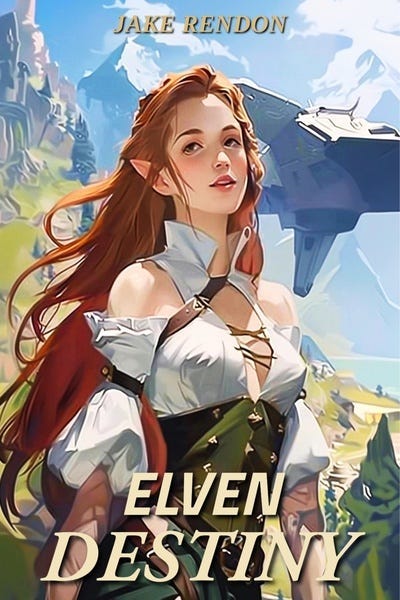
So many projects await the day when the AI tools gain a better ability to maintain a consistent character across multiple scenes. I sense a flood gate set to be unleashed.
Cool. Something else to try.