
Experience Beats Analysis
AI chess tools can explain why a move is wrong, but not how to avoid repeating mistakes.

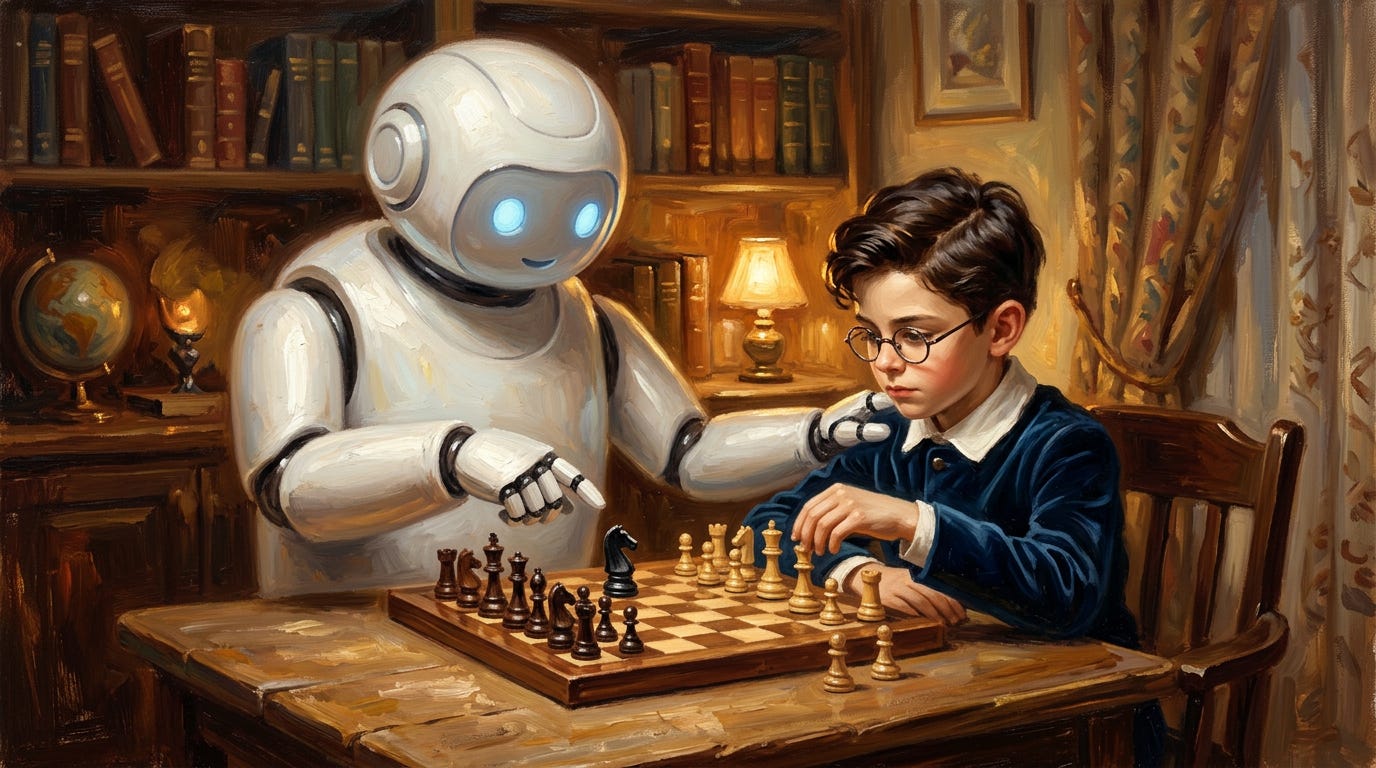
Losing a chess game and checking the engine afterward is a ritual that most online players know well. Stockfish will tell you that Nf5 was the best move on turn 22 and that your actual move cost half a pawn of positional advantage, but it will not tell you why Nf5 was correct or how you might have found it over the board. A growing category of AI coaching tools is trying to close that gap by translating engine analysis into human-readable explanation. The tools have gotten good at the why, and changing how a player actually thinks about the board turns out to be the harder problem.
Understanding the errors
Chess.com surpassed 200 million registered members last year, with more than 20 million games played daily on the platform alone. Most of those players arrived during the boom that followed pandemic lockdowns and Netflix’s The Queen’s Gambit, learned to play online, and now look for coaching in the same digital environment where they play their games. Over 90% of the global chess community falls below 1,500 Elo. Stockfish, the dominant open-source engine, plays at roughly 3,500 Elo, and a recommendation that depends on calculating a sacrifice three moves deep offers nothing to a player whose horizon stops at two. The result is a coaching vacuum: hundreds of millions of players generating data about their mistakes with no effective means of converting that data into improvement.
Microsoft Research’s Maia project, developed with the University of Toronto and Cornell, trained a chess engine on millions of human games to predict what a human at a given rating would most likely play. When personalized to a specific player, Maia predicts that player’s moves with up to 75% accuracy. Playing against Maia at 1,200 Elo on Lichess means facing realistic 1,200-level mistakes and plans, which turns the engine into a practice partner that teaches through familiar errors.
Commercial tools have built on this shift toward comprehensible analysis. DecodeChess uses Stockfish for its engine but wraps each recommendation in natural-language explanation, covering threats, plans, piece functionality, and the strategic concept behind the move. Aimchess takes a different approach, importing a player’s game history and running statistical analysis to surface recurring weaknesses like missed fork patterns, endgame conversion failures, and accuracy drops under time pressure. A randomized field experiment at the University of British Columbia found that personalized lessons built from a player’s own mistakes outperformed generic training content, and calibration to the individual has become the organizing principle of the category.
The weight of experience
All of these tools analyze the move record, capturing what happened on the board without revealing why the player made each decision. DecodeChess explains every move clearly, but as one reviewer noted after three months of testing, its explanations do not accumulate. The tool offers the same quality of insight for a player’s two-hundredth game as for the first, because it carries no model of what that player already understands. Aimchess aggregates patterns across games, which edges closer to longitudinal coaching, but its recommendations tend toward diagnosis (”practice rook endgames”) instead of pedagogy (”here is why you keep misjudging rook activity in these structures”).
A human coach watching a student play can ask what the player was considering at a given moment, a question that no current tool replicates. That question accesses the player’s reasoning process, which is often more instructive than the move itself. A player who chose the right move for the wrong reason has a different training need from one who chose the wrong move while reasoning correctly about the position. Human coaches also read emotional state, noticing when a student rushes out of frustration or second-guesses out of anxiety, and adjust their teaching accordingly.
The tools closest to bridging this gap are approaching it from opposite directions. Aimchess builds its coaching from data aggregation across hundreds of games, while Caissa, an Indian platform co-developed with GM Vishnu Prasanna, embeds grandmaster pedagogy in a structured AI curriculum and has documented student improvements of nearly 900 Elo points in under a year. Neither has yet produced genuine adaptive coaching, a system that builds a cumulative understanding of how a specific player reasons about chess and adjusts its teaching as that reasoning changes over weeks and months.
Learning to teach
For the 200 million people playing chess on Chess.com alone, tools like DecodeChess and Aimchess already represent a meaningful step forward from the raw engine output that was the only AI option a few years ago. The remaining gap between analyzing moves and understanding thinking will likely close incrementally, through better data and better models of human cognition, with each generation of tools slightly less alien than the last. Chess, which has served as AI’s proving ground for decades, may turn out to be where the field learns to teach.