
Anthropic Settlement NOT Approved
Judge Alsup intends to withhold approval at the next hearing

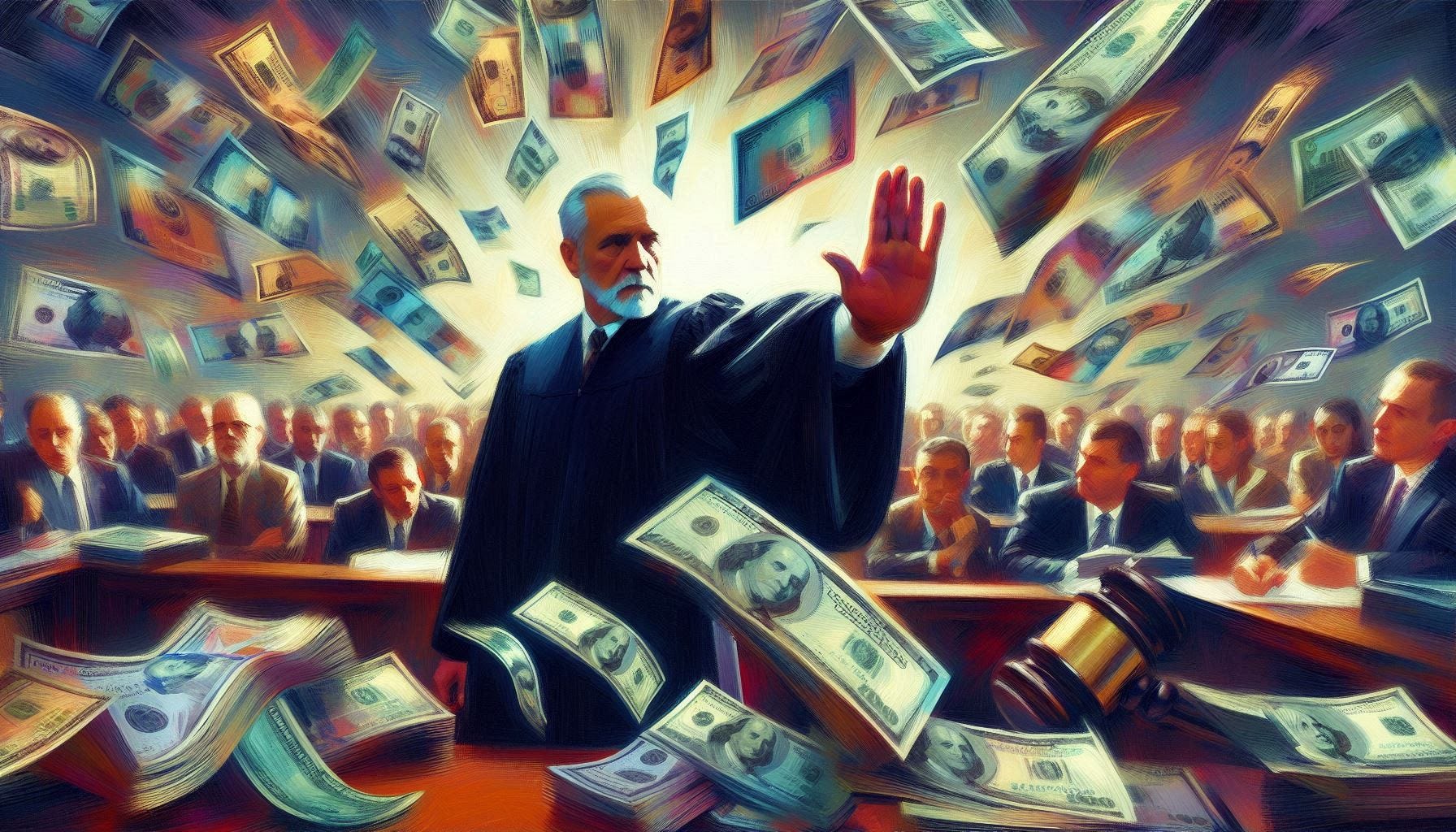
The massive $1.5 billion settlement that will only compensate for 465,000 of the 7 million works pirated between Anthropic and the Bartz class action is in jeopardy due to the doubts of the judge about it being adequate to the circumstances.
At a hearing Monday, US District Judge William Alsup blasted a proposed $1.5 billion settlement over Anthropic's rampant piracy of books to train AI.
The proposed settlement comes in a case where Anthropic could have owed more than $1 trillion in damages after Alsup certified a class that included up to 7 million claimants whose works were illegally downloaded by the AI company.
Instead, critics fear Anthropic will get off cheaply, striking a deal with authors suing that covers less than 500,000 works and paying a small fraction of its total valuation (currently $183 billion) to get away with the massive theft. Defector noted that the settlement doesn't even require Anthropic to admit wrongdoing, while the company continues raising billions based on models trained on authors' works. Most recently, Anthropic raised $13 billion in a funding round, making back about 10 times the proposed settlement amount after announcing the deal.
Alsup expressed grave concerns that lawyers rushed the deal, which he said now risks being shoved "down the throat of authors," Bloomberg Law reported.
In an order, Alsup clarified why he thought the proposed settlement was a chaotic mess. The judge said he was "disappointed that counsel have left important questions to be answered in the future," seeking approval for the settlement despite the Works List, the Class List, the Claim Form, and the process for notification, allocation, and dispute resolution all remaining unresolved.
Denying preliminary approval of the settlement, Alsup suggested that the agreement is "nowhere close to complete," forcing Anthropic and authors' lawyers to "recalibrate" the largest publicly reported copyright class-action settlement ever inked, Bloomberg reported.
Of particular concern, the settlement failed to outline how disbursements would be managed for works with multiple claimants, Alsup noted. Until all these details are ironed out, Alsup intends to withhold approval, the order said.
As of this writing, the list of covered works spans about 465,000, Alsup said. That's a far cry from the 7 million works that he initially certified as covered in the class. A breakdown from the Authors Guild—which consulted on the case and is part of a Working Group helping to allocate claims of $3,000 per work to authors and publishers—explained that "after accounting for the many duplicates," foreign editions, unregistered works, and books missing class criteria, "only approximately 500,000 titles meet the definition required to be part of the class."
The settlement definitely isn’t going to end Anthropic’s problems due to the fact that the omission of all the foreign-registered works and self-published works means that literally hundreds of thousands of authors and publishers have not only been given motivation to find other venues to pursue the AI giant, but they’ve also been given a roadmap for how to do so.
This is why it is incumbent upon Anthropic as well as the other AI companies that engaged in piracy to find a way to compensate everyone whose copyrights were violated, not just the small fraction of those whose rights are formally protected by copyright and case law.
Since paying $3k for each of the 465,000 works covered by the proposed settlement is $1.395 billion, Anthropic could offer the same to all of the authors and publishers of the pirated works for less than $20 billion. That’s a lot, but it’s less than 11 percent of their market cap.
Anthropic could even reduce the cash burden by offering stock in lieu of payments, which considering how excellent their textual AI generation has proven to be, more than a few people would likely accept.
This ‘settlement’ is basically Anthropic shoplifting the entire Library of Congress, then tossing the cashier a tip jar coin on the way out. They raised $13B off stolen words and want credit for paying back lunch money. If this is accountability, Enron deserves a participation trophy.
I've been thinking about this case since you brought it up before, and it seems like another landmark moment in a company just breaking the law and paying it off as a tiny sum. From a reductionist perspective, they get $15B and pay a 10% tithe of $1.5B to the system.
If the legal system approves this, they are very loudly saying "some people can pay the tithe and break the law", as we already know for chemical spills, vaccines and other such disasters where the victims are not able to collect from those responsible.