
A Piece on the Board
In which the AI industry is reminded who makes the rules.

For the better part of three years, the leading AI companies have operated with a degree of autonomy that, in retrospect, looks historically unusual. They set their own safety policies and governance frameworks, chose their own customers, and negotiated with governments as something close to equals. The past ten days ended that arrangement.
Anthropic refused to grant the Pentagon unrestricted access to Claude and learned, in the space of a week, that an AI company embedded in military infrastructure is a strategic asset that a sovereign state will move, compel, or replace as circumstances require. OpenAI stepped into the gap within hours, demonstrating how quickly any individual company can be substituted. And in Beijing, the National People’s Congress published a five-year plan so saturated with AI that it reads less like technology policy than like a mobilization order, one in which the question of whether AI companies agree with the state’s objectives does not arise because it is not considered relevant.
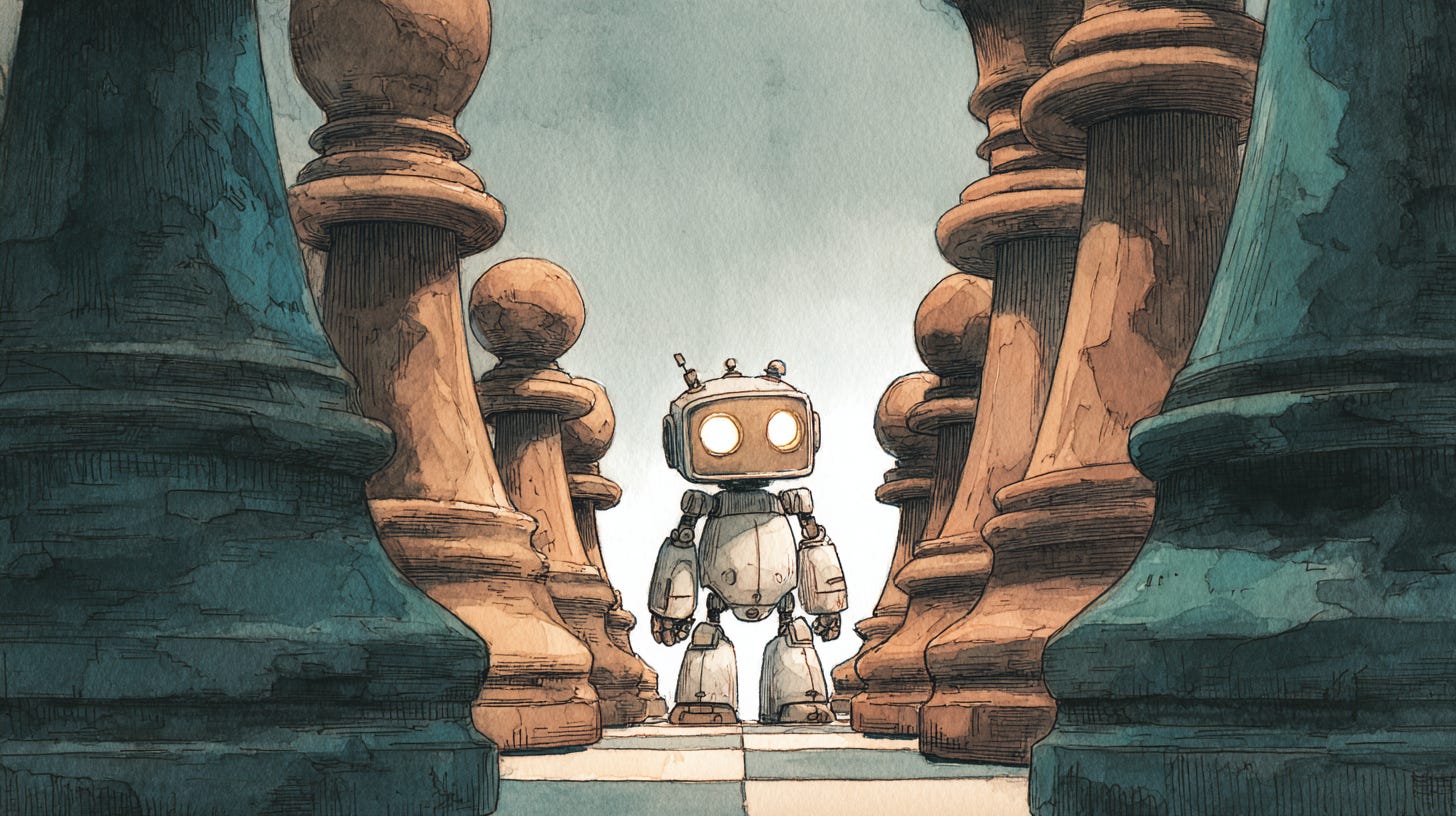
Anthropic learns its place
The dispute between Anthropic and the Department of Defense had been building since late 2024, when Anthropic signed a $200 million contract that made Claude the first major AI model deployed on classified military networks. That contract made Anthropic indispensable to American defense operations in a way no AI company had been before, and it also made the company a dependency that the state could not tolerate being conditional.
For months, the Pentagon pushed for language granting access to Claude for “any lawful use.” Anthropic held two exceptions: no mass domestic surveillance of Americans, and no fully autonomous weapons. The company argued that current frontier models are not reliable enough for lethal autonomy and that bulk data collection on citizens constitutes a rights violation regardless of legality. With Claude already woven into classified operations, Anthropic appears to have believed that its technical indispensability gave it the standing to hold these lines. The government’s response demonstrated the difference between utility and power.
Negotiations collapsed on February 28. President Trump ordered federal agencies to cease all use of Anthropic’s technology and told Politico he had “fired” the company “like dogs.” Defense Secretary Pete Hegseth designated Anthropic a supply-chain risk to national security, a classification previously reserved for foreign adversaries, requiring defense contractors to certify they do not use Anthropic’s models in any military work.
The move drew furious criticism from Anthropic and some outside observers, but its logic is more consistent than it first appears. The Pentagon is treating the company separately from its product: Anthropic is considered a security risk for its attempt to dictate terms; Claude, already embedded in warfighting operations, remains essential. CEO Dario Amodei framed the two positions as “inherently contradictory: one labels us a security risk; the other labels Claude as essential to national security.” Stanford’s Herbert Lin called the affair “all very puzzling”. The Pentagon’s position remains nevertheless clear: AI technology is critical, but its builders must know their place.
Under Secretary Emil Michael made the hierarchy explicit on the All-In podcast, describing the “whoa moment” when Pentagon leadership realized how deeply Claude had penetrated military operations and what it would mean if “some guardrail picked up, some refusal happened for the next fight.” The concern was not that Anthropic’s safety restrictions were wrong on policy grounds but that a private company had the ability to impose them at all.
By Thursday, the designation was formal. Amodei vowed to challenge it in court, though reports from the Financial Times and Bloomberg indicate he has also resumed direct negotiations with Michael. Claude, meanwhile, is still being used in active military operations in Iran under a six-month transition period.
Altman bends the knee
Hours after Anthropic was blacklisted on February 28, OpenAI CEO Sam Altman announced his company had reached its own agreement with the Defense Department.
Altman spent the following days managing the fallout. By Monday, he conceded that the announcement “looked opportunistic and sloppy”, called Anthropic’s supply-chain designation “an extremely scary precedent,” and urged the DoD to reverse it. OpenAI revised the language in its agreement, adding explicit prohibitions on domestic surveillance of U.S. persons, including through commercially acquired personal data. Critics had identified loopholes in the original text that would have permitted precisely the kind of bulk data analysis Anthropic had refused to enable, and the updated terms converged, in substance, toward what Anthropic had been demanding all along.
The consumer response complicated the picture. ChatGPT saw a 295% spike in U.S. app uninstalls and a 775% surge in one-star reviews. Claude climbed to number one on both Apple and Google’s app store charts by March 1, up from outside the top 100 at the end of January. Anthropic reported record daily signups, a 60% increase in free users since January, and paid subscribers more than doubling since the start of the year.
Whether this amounts to lasting market pressure remains unclear. ChatGPT retains roughly 900 million weekly users, and protest-driven download spikes tend to fade. An internal Anthropic memo, reported by TechCrunch, captured the sharpness of the moment: Amodei called OpenAI’s deal “safety theater” and said the difference between the two companies was that OpenAI “cared about placating employees, and we actually cared about preventing abuses.” The exchange is vivid, but it risks obscuring the structural reality. Neither company set the terms. The Pentagon needed a model on its classified networks and got one within hours of losing the other, and which company provided it mattered far less than the state’s ability to make the swap.
The Middle Kingdom mobilizes
If the American episode demonstrated what happens when an AI company mistakes its utility for autonomy, China’s week illustrated the version of this relationship where autonomy was never on offer.
The 15th Five-Year Plan, released March 5 alongside the opening of the National People’s Congress, is a 141-page document that mentions AI more than fifty times. It includes an “AI+ action plan” calling for robots to fill labor shortages in manufacturing and logistics, autonomous AI agents operating with minimal human oversight, “hyper-scale” computing clusters supported by cheap electricity, and open-source AI communities positioned as a competitive strategy against the United States. Analysts at Gavekal Dragonomics noted that the explicit endorsement of open source had not appeared in previous planning documents and represents a deliberate differentiation from the American approach, where the major labs remain split between proprietary and open models. Beyond AI, the plan targets quantum computing, 6G, brain-machine interfaces, nuclear fusion, and commercialized humanoid robots, with XPENG planning to manufacture its IRON humanoid at a rate of 50,000 units per year by the second half of 2026.
The underlying logic is demographic as much as strategic.